

Why Quality Control Matters in Manufacturing
Quality control ensures that products meet customer expectations and regulatory standards. When defects go unnoticed, the consequences are significant and far-reaching.
Early inspection prevents small problems from becoming expensive disasters. Think of it as fixing a crack before it turns into a structural failure.
When defects go unnoticed:
- ✘ Production costs increase
- ✘ Rework and scrap rates rise
- ✘ Customer trust declines
- ✘ Legal risks may occur

How In-process Inspection Works
In-process Inspection integrates seamlessly into production lines. Instead of stopping operations, inspections happen at predefined checkpoints.
Raw Material
Verifying the quality of incoming materials before production starts.
First Article
Inspecting the very first part produced to ensure setup accuracy.
Mid-process Checks
Continuous monitoring at various stages of the assembly line.
Final Stage
Verification before the product moves to final packaging.
Real-Time Monitoring Systems
Modern production uses sensors and automated equipment to monitor dimensions, temperature, pressure, and alignment in real time. If measurements fall outside acceptable ranges, machines alert operators instantly. This reduces downtime and eliminates large batches of defective products.
Key Tech Features:
- ◆ Automated Alerts
- ◆ Precision Sensors
- ◆ Live Data Dashboard
- ◆ Instant Error Detection
Manual vs Automated Inspection
Manual Inspection
Involves trained personnel visually examining or measuring components. It works well for low-volume or complex products.
Automated Inspection
Uses cameras, laser scanners, or AI-driven systems. It is faster and more consistent for high-volume manufacturing.
* Both methods can coexist depending on production complexity.
Types of In-process Inspection Methods
1. Visual Inspection
Operators look for cracks, scratches, discoloration, or assembly errors during the manufacturing process.
2. Dimensional Inspection
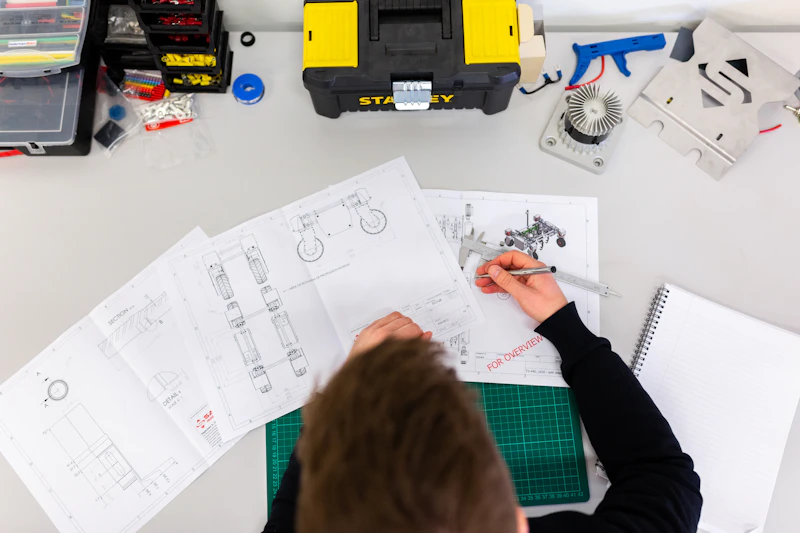
Precision tools measure parts to confirm they meet engineering drawings and required tolerances.
3. Functional Testing
Products are tested to verify performance under operating conditions before moving to the next stage.
Statistical Process Control (SPC)
SPC uses data collection and control charts to monitor process stability. By analyzing trends, manufacturers can detect variations before defects occur. Instead of reacting to problems, SPC helps prevent them.
Sampling Techniques
Inspecting every product may not always be practical for efficiency. Sampling techniques balance quality assurance and operational efficiency. These methods include:
- Random sampling
- Systematic sampling
- Acceptance sampling
Tools and Technologies Used
Modern In-process Inspection relies heavily on technology. Common tools include Calipers, Micrometers, Coordinate Measuring Machines (CMM), Machine vision systems, Laser scanners, and Automated Optical Inspection (AOI).
Digital Quality Management Systems (QMS) software integrates with ERP and production systems, creating a connected quality ecosystem in line with Industry 4.0 advancements.
7 Powerful Benefits of Implementing In-process Inspection
Implementing In-process Inspection provides measurable advantages that transform manufacturing quality and operational efficiency.
1. Reduced Production Costs
Early defect detection prevents expensive rework and long-term financial losses.
2. Lower Scrap Rates
Faulty materials are identified early, significantly reducing industrial waste.
3. Improved Product Consistency
Continuous monitoring ensures that every part meets the same high-quality standards.
4. Enhanced Customer Satisfaction
Fewer defects in the final product mean better reliability and happier clients.
5. Regulatory Compliance
Essential for industries like aerospace and medical devices that require strict documentation.
6. Faster Problem Resolution
Real-time alerts allow for immediate adjustments, minimizing production downtime.
7. Stronger Brand Reputation
Consistent quality builds long-term trust and a competitive edge in the market.
Industry Applications
In-process inspection is non-negotiable in high-stakes industries where precision is a matter of safety and functionality.
Turbines & Components
Implants & Instruments
Engine & Safety Parts
Circuit Boards (PCB)
Standards & Compliance
Adhering to international standards ensures global market access and reliability.
General Quality Management Systems.
Specific to the Aerospace industry.
Requirements for Medical Devices.
Conclusion: The Future of Quality Control
In-process inspection is more than just a checkpoint; it is a strategic investment in **efficiency**, **safety**, and **brand integrity**. By catching defects early, manufacturers can ensure they deliver only the highest quality products to their customers.
"Quality is not an act, it is a habit." – Implementing these systems today ensures a competitive edge for tomorrow.
Ready to Enhance Your Production Quality?
Contact Our Quality ExpertsClick above to visit our contact form and get in touch with the JSP team.